
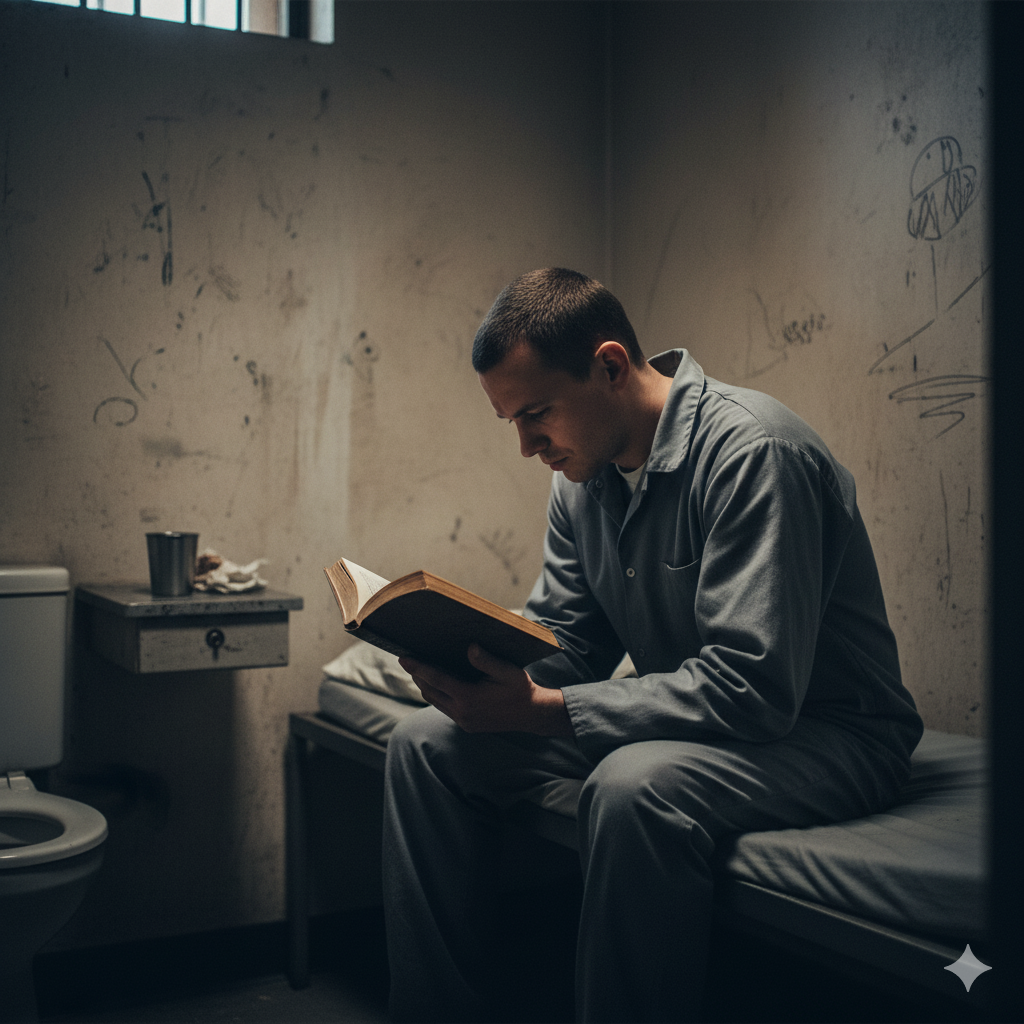
 We’ve all heard the same line from people caught in wrongdoing—public figures, celebrities, even people like us: “That’s not who I am.” It’s a comforting defense, a way of separating the self from the harm we caused. But for those of us who have lived through indictment, conviction, or incarceration, that phrase becomes far more complicated. We believed we were people of conscience, yet our actions told a different story. How do we reconcile those two selves? How do we acknowledge the truth of what we did without destroying the possibility of who we might become? This essay is an attempt to explore that divide—and the long, difficult work of becoming someone whose actions finally align with the values we once only claimed to hold.

A White-Collar Journal forum for criminal justice, lived experience, and the personal search for redemption
We’ve all heard the same line from people caught in wrongdoing—public figures, celebrities, even people like us: “That’s not who I am.” It’s a comforting defense, a way of separating the self from the harm we caused. But for those of us who have lived through indictment, conviction, or incarceration, that phrase becomes far more complicated. We believed we were people of conscience, yet our actions told a different story. How do we reconcile those two selves? How do we acknowledge the truth of what we did without destroying the possibility of who we might become? This essay is an attempt to explore that divide—and the long, difficult work of becoming someone whose actions finally align with the values we once only claimed to hold.
This Is Not Who I Am
One of the hardest things for justice-impacted people to confront is the gap between who we believed ourselves to be and what we actually did. It’s not a small gap; it is a canyon. Most of us carried an image of ourselves as people of conscience—responsible, ethical, decent. Yet our records, the legal ones and the private ones, tell a different story. Reconciling those two identities is not a philosophical exercise. It is the essential work of rebuilding a life after wrongdoing.
I always believed I was a person of conscience. But when I look back honestly, I see a long trail of failures that didn’t begin with my indictment or my arrest. They go back to childhood. I can still remember stealing twenty dollars from my grandmother’s purse—an act as small as it was revealing. I knew it was wrong. I felt it was wrong. But I did it anyway. And that pattern—knowing, feeling, doing anyway—became a quiet through-line of my life. It didn’t always show. I still did good things. I still loved my family. I still tried to be the kind of man I imagined myself to be. But the duplicity was there, growing in the dark, waiting for the conditions that would let it flourish.
So when my world finally collapsed, I found myself saying the same thing so many public figures say after their misdeeds are exposed: “That’s not who I am.” It’s a comforting phrase. It lets us separate ourselves from our own actions, as if our worst behavior was an impersonation. But as former NFL coach Bill Parcells once said, “You are what your record says you are.” That’s not cynicism. It’s a form of accountability.
Our actions—especially the ones that caused harm—are part of who we are.
The challenge is not to deny them but to integrate them, to understand how we became capable of what we did, and then to build a self that’s rooted in truth rather than performance. That requires more than calling past decisions “mistakes.” Mistakes are accidental. What many of us did involved intention, avoidance, rationalization, and self-deception. To chalk it up to a “bad decision” is to miss the deeper point: wrongdoing emerges from character, and so must repair.
So how do we reconcile? How do we build a new identity that doesn’t hide from the past but isn’t imprisoned by it?
First, we tell the truth—to ourselves and to others. We stop trying to frame our actions as anomalies. We acknowledge the patterns, the choices, the fears, the insecurities, and the ego that shaped them. That honesty is painful. It strips away the myth of ourselves that we carried for decades. But it’s also liberating. You cannot rebuild on a lie.
Second, we adopt responsibility without self-condemnation. This is the narrow path. Some people cling to denial; others drown in shame. But between those two poles is the place where transformation happens. Yes, we are responsible for what we did. Yes, people were harmed. But we are also more than the worst thing we have ever done. Accountability and dignity can coexist.
Finally, we begin living in a way that demonstrates, over time, a different kind of character. Not through grand gestures, but through the quiet, daily work of being honest, reliable, and useful. Through service. Through humility. Through the uncomfortable willingness to sit with our own history rather than erase it.
Over time—sometimes years—we earn the right to say, not as a defense but as a truth: “This is who I am now.” A person shaped by wrongdoing but not defined by it. A person who learned, changed, and chose a different path. A person of conscience not because we claim the title, but because our actions begin to match the values we once only imagined we lived by.
That is the great challenge after prison. Not rebuilding your career or your reputation, not learning how to walk through the world with a felony on your back. The real work is internal: reconciling the fractured self and constructing an identity grounded in honesty, humility, and the hard-earned possibility of redemption.
Because in the end, who we are is not what we say.
It is what we do—now, and going forward.
If you’re new to White-Collar Journal, you can read earlier chapters and essays on incarceration, justice, and reentry at whitecollarjournal.com.
Thank you for reading White-Collar Journal. Subscribing is free, and I hope you’ll continue with me as I explore stories of incarceration, justice, and redemption.
Comments