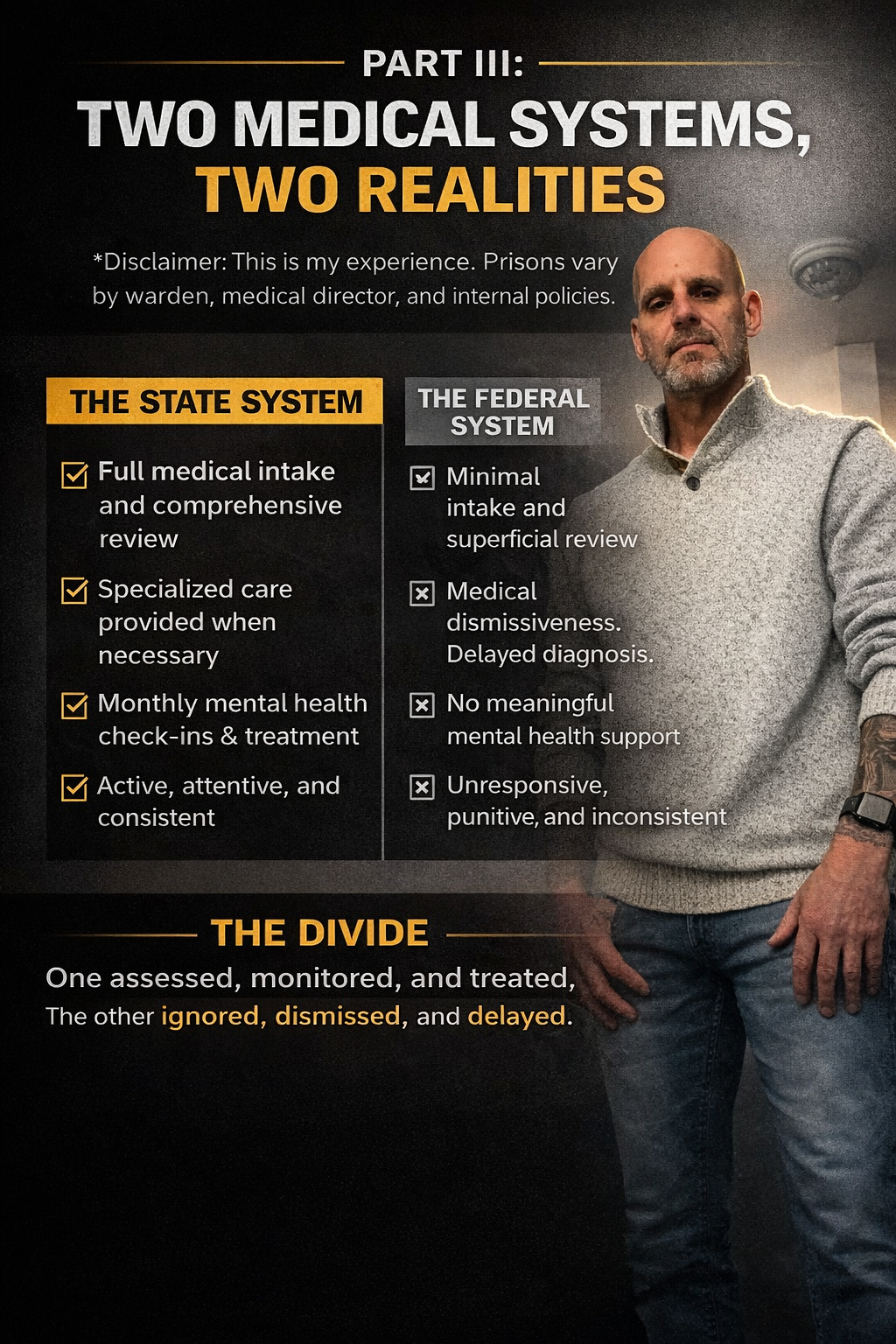
 PART III: TWO MEDICAL SYSTEMS, TWO REALITIES Disclaimer: This is my lived experience. Institutions vary depending on leadership, medical directors, and internal culture.
THE STATE SYSTEM My first day at Fox Lake Correctional Institution in Dodge County, Wisconsin began with a full medical intake by the Health Services Unit. They conducted a detailed assessment of my physical condition, pain levels, and medical history. The approach was professional and attentive.
My prescribed medications were verified and provided without delay. When specialized care became necessary, I was transferred to UW Madison. Diagnostic scans were completed.
Advanced procedures were scheduled. A necessary stent was placed. The response was proactive rather than reactive. Mental health care was consistent. I met with psychiatric staff once a month. That structure provided stability and accountability in a setting where both are rare. The system was not perfect. But it functioned.
THE FEDERAL SYSTEM Arrival at FCI Terre Haute presented a different reality. Intake consisted of a temperature check and a COVID screening. There was no comprehensive medical assessment and no meaningful review of my medical history.
When I reported significant pain and expressed concern about possible kidney failure, the response was dismissive. I was told to submit a request and cautioned about disciplinary consequences if I pushed the issue.
The delay in diagnosis was not minor. It was consequential. Mental health support was effectively nonexistent. Although federal policy discourages single-cell housing as a suicide prevention measure, I received no psychiatric care during my stay.
There were no monthly consultations. No structured oversight.
THE DIVIDE This is not a minor administrative difference. One system assessed, monitored, and treated. The other minimized, delayed, and discouraged.
Both operate within the same broader correctional framework. Yet the lived medical experience was fundamentally different. This is not speculation. It is what happened.
Comments