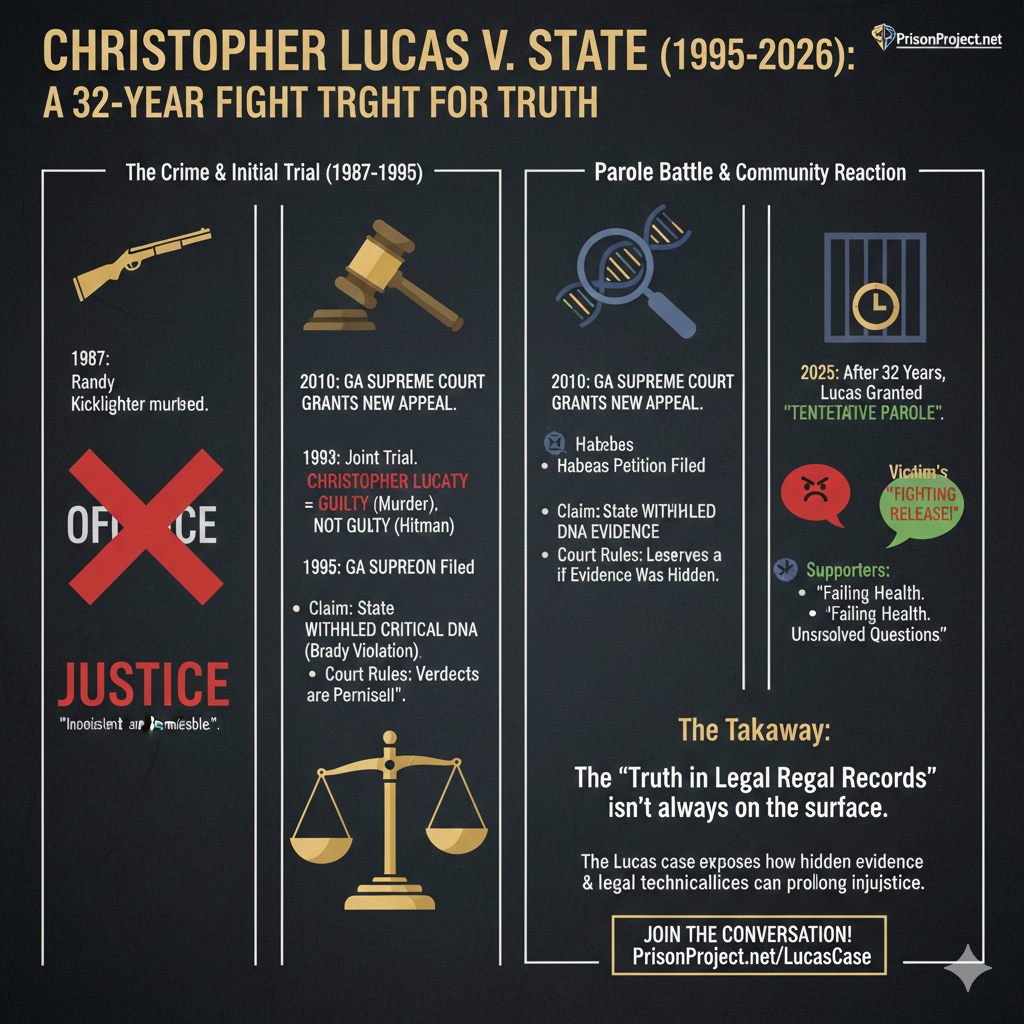
 The Life and Trials of Christopher Lucas: A Decades-Long Battle for Truth
In the world of justice reform, we often talk about "closed cases." But for Christopher Lucas, convicted of the 1987 murder of his son-in-law, Randy Kicklighter, the case has remained anything but closed. His journey through the Georgia legal system highlights the massive hurdles defendants face when trying to introduce new evidence decades after a conviction.
The "Inconsistent Verdict" Problem
One of the most jarring aspects of the original 1993 trial was the jury's verdict. Christopher Lucas was tried alongside James Smith, the man he supposedly hired to carry out the murder.
The jury reached a startling conclusion: they convicted Lucas of paying for a hit, but they acquitted the hitman. When Lucas appealed, arguing that he couldn't be guilty of hiring someone who was found innocent, the Georgia Supreme Court (in 1995) ruled that "inconsistent verdicts" are legally permissible. This meant that even if the logic didn't align, the conviction would stand.
The "Interesting" DNA Development
The most significant turning point for Lucas came in 2010, when he was granted a rare second look by the Georgia Supreme Court. This is where the case connects deeply with our mission at PrisonProject.net:
- Withheld Evidence: Lucas filed a habeas corpus petition alleging that the State had withheld critical evidence during his original trial—what lawyers call a "Brady violation."
- The DNA Factor: Central to his claim was the existence of DNA evidence that he was not aware of at the time of the trial. While DNA testing was in its infancy in 1987, modern reviews of old case files often uncover biological evidence that was never tested or shared with the defense.
- The Legal Hurdle: The state attempted to dismiss his petition as "successive" (meaning he had already had his chance to appeal). However, the Supreme Court ruled that if Lucas truly didn't know the evidence existed because it was withheld, he deserved a hearing to determine the truth.
Where the Case Stands Today (2025–2026)
After 32 years in prison, the fight for Christopher Lucas’s freedom moved to the Board of Pardons and Paroles.
In late 2025, reports surfaced that Lucas had been granted a "tentative parole release." This sparked intense debate in Effingham County. While the victim’s family has pushed back strongly against his release, advocates for Lucas point to his failing health and the unresolved questions surrounding the "hidden" evidence from his original trial.
The Lesson for The Advocate
If we look at this through the lens of our blog’s hero, "The Advocate," the Lucas case is a reminder that the "truth in legal records" isn't always on the surface. Sometimes, the most important facts are the ones that were left out of the record entirely.
What do you think of this case? Does an "inconsistent verdict" feel like justice to you? Join the conversation in the comments.
Comments