When Young People Enter the Justice System, Who Makes Sure They Understand It?
A young Oregon advocate asks whether education, understanding and one consistent person beside a young defendant could change what happens next.
The youth demographic is one of the most vulnerable when it comes to systemic challenges. They often are overwhelmed, lose support networks, and don't have a significant understanding of their rights.
When they enter the justice system, they often have to take the gamble on whether they get an attorney suited for their case and who will take the time to explain things in depth. Additionally, they face pressure from the DA's office to take plea deals, which for the youth demographic can feel extremely uncomfortable, scary, or anxiety-provoking.
Oftentimes, young people only have a loose, bare-minimum understanding of their constitutional rights, the criminal justice process, and what their options are.
This creates a significant barrier to obtaining true justice where our system is concerned.
Prosecutors and defense attorneys often don't solve the problem, as defense attorneys are often overworked and have extensive caseloads and don't always have the time.
Prosecutors, while their job is to serve justice, are still human. Tunnel vision and internal bias are not things they are immune to, and conviction rates can sometimes supersede what is truly in the interest of justice.
The Role I Believe Justice Advocates Could Play
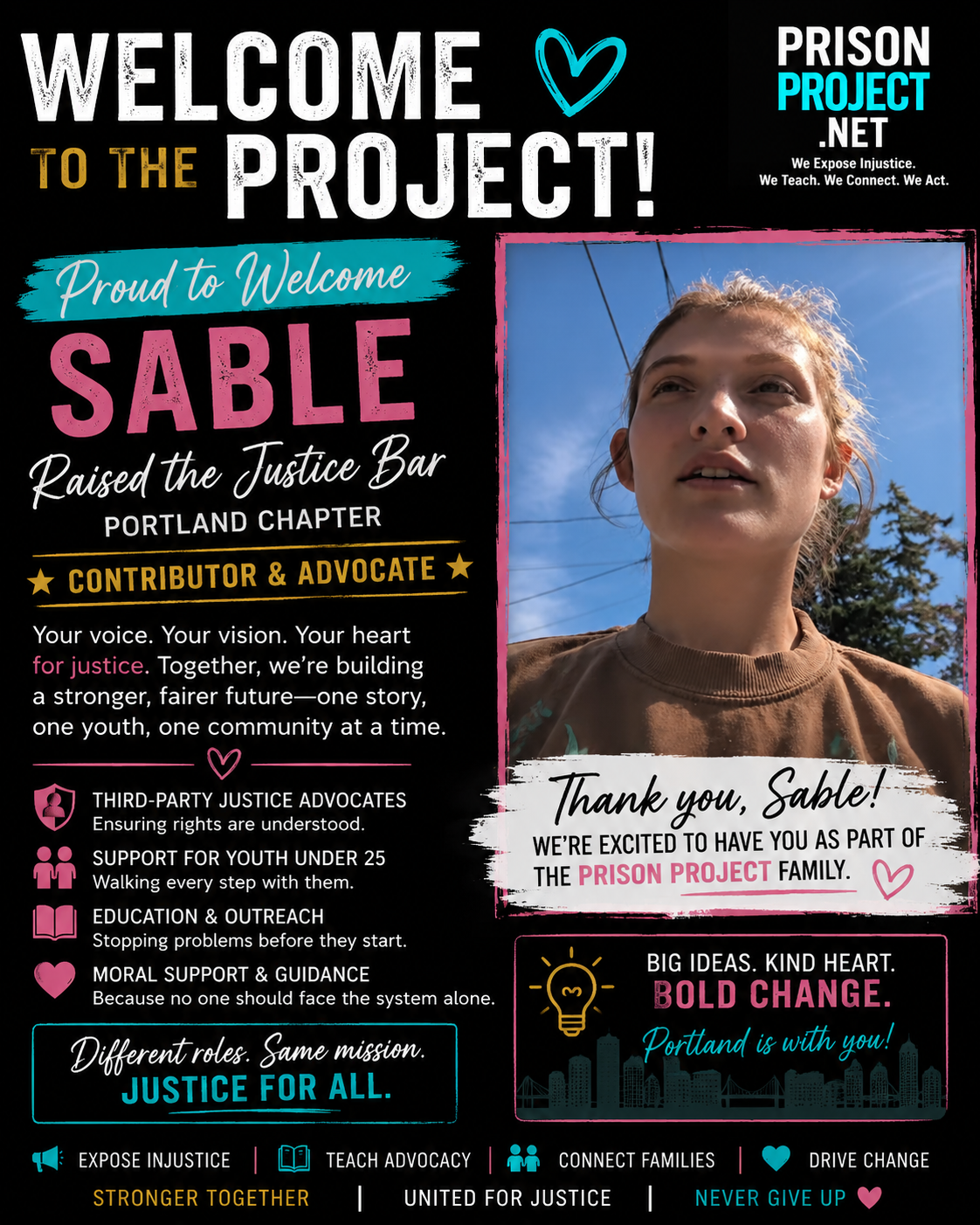
Justice advocates, if working with clients, should come into play in the beginning.
They should ensure clients know their rights and have an in-depth understanding of the process. They would then go through the process with the client, attend court dates and provide moral support from the gallery, and help explain documents and options as they come up.
The advocate would not be there to give opinions, tell clients what to do, or give legal advice. They would be there for education and support.
Why I Started Thinking About This
My current partner has a PCR filed against the state due to IAC, constitutional rights violations, and wrongful conviction due to innocence.
I helped him file that case, and going through it I saw a large gap in what should have been a much different process.
“My mom is an attorney. I was raised to have faith in our system, but the more I looked at my partner's case, the more that faith was shaken.”
It didn't sit right with me.
And I noticed that when my partner was facing his original case at freshly 18, the system failed him.
That inspired this entire idea.
My partner, by proxy, introduced me to the stories of a lot of other youth who faced the criminal justice system. His story isn't unique here.
There is a lot of pushing for adult charges against minors, upward departure sentencing, and pushes to apply Measure 11 even in cases where it may not be appropriate.
It's become apparent to me that it is a common occurrence here in Oregon for the youth demographic, who are particularly vulnerable, and that within itself is an issue.
What I Want to Build
I want to pass a law, dedicated to my partner and his challenges, that would require an independent third-party justice advocate for all youth under 25 years old.
In theory, this law would protect the youth demographic, protect the integrity of our justice system, and reduce the number of false convictions or convictions due to system failures.
Additionally, my hope is that it reduces the need for PCR cases and helps save court time and resources by handling cases properly the first time around.
✦ What Would Success Look Like?
Five years from now, if we can be functioning and piloting our law concepts in at least three counties in the state, I would consider that success.
If we have enough volunteers to help even 100 clients in a six-month period — hopefully more — that would be a success.
If we can educate and do outreach to every middle and high school in Oregon at least once a year, that would be a success.
One Story That Explains Why This Matters to Me
I actually have a real story I can share.
I am not permitted to share details at this time with the active PCR case, but I can be vague enough to protect the details.
A young man faced the justice system at 16 years old. Formal charges were not filed until the week of his 18th birthday.
He had a public defender who told him he would win, but quickly disappeared.
The boy was left with no family or friend support, no attorney present to explain things to him, and a DA who made it his mission to put him away.
He was asked to waive several rights with no explanation.
Told to just sign things like he was taking out a car loan.
And not a single person stopped to explain anything to him.
He was just expected to know.
In the end, he served multiple years in prison and has to face several years of parole for a crime he says he didn't commit. Now he has to face the legal threshold required for a granted PCR.
If an advocate was present, right out of the gate he could have understood not to sign documents he didn't understand.
To ask questions.
To make people explain.
An advocate could have helped him understand the rights involved, the questions he could ask his attorney, and the options he needed to discuss with counsel.
There are several areas where an advocate being present could have significantly shifted the experience and potentially the outcome for someone who was harmed by the justice system.
I don't expect this idea to become reality overnight.
But I believe young people entering the justice system deserve someone whose job is to make sure they understand the system they have suddenly found themselves inside.
Someone who educates.
Someone who stays.
And I want to help build that.
Comments